

 Located directly opposite CHARING CROSS TRAIN STATION at: Room 102, 8 Duncannon Street, WC2N 4JF, London, United Kingdom
What Is an e-Apostille? UK Electronic Apostilles Explained
Posted on 29th October 2026For decades, an apostille meant a paper certificate attached to a document, posted or carried by hand to wherever it was needed. That is still the most common way UK apostilles are issued. Alongside it, the Foreign, Commonwealth and Development Office (FCDO) now offers an e-Apostille: an electronic apostille attached to a digitally signed PDF that can be emailed anywhere in the world in seconds.
This guide explains what an e-Apostille is, which documents qualify, how the process differs from a paper apostille, and the most important question of all: whether the person or organisation receiving your document will accept it.
What exactly is an e-Apostille?
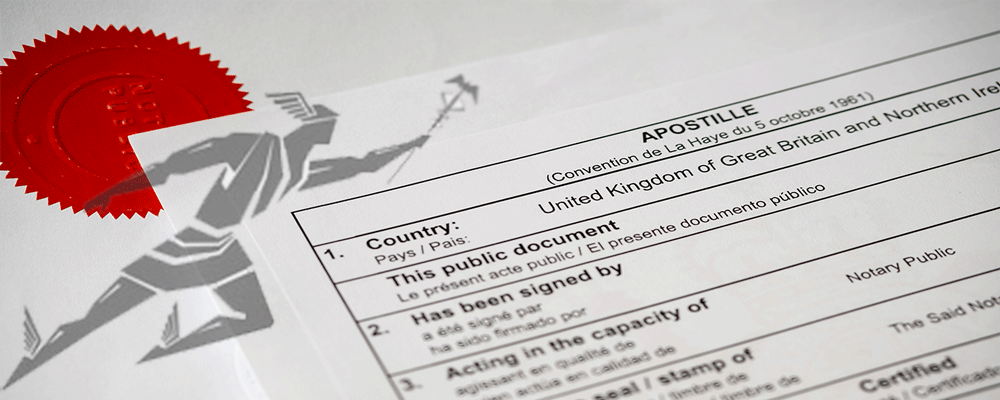
An e-Apostille does the same legal job as a traditional paper apostille. Under the Hague Apostille Convention, an apostille certifies the origin of a public document. It confirms that the signature, seal or stamp on the document is genuine and identifies the capacity of the person who signed it. It does not certify that the content of the document is true or correct.
The difference lies in the format. With a paper apostille, the FCDO attaches a physical certificate to a physical document. With an e-Apostille, the document is a PDF that has already been digitally signed, and the FCDO attaches an electronic apostille to that PDF. You receive a single digital file containing both the document and the apostille.
The Hague Conference on Private International Law (HCCH) supports electronic apostilles through its electronic Apostille Programme (e-APP). The HCCH’s position is that the Convention is technology-neutral, so an apostille issued electronically is not in principle any less valid than one issued on paper. Whether a particular country or organisation will accept one in practice is a separate matter, covered below.
How is an e-Apostille verified?
Each UK apostille, paper or electronic, carries a unique number and date of issue. The FCDO provides an online service for checking that an apostille is genuine. Because an e-Apostille is a digital file with electronic signatures, the recipient can also check that the file has not been altered since it was signed. This is one of the main security advantages of the electronic format. See gov.uk for the FCDO’s current guidance on verification.
Which documents can get a UK e-Apostille?
This is where many people are caught out. You cannot simply scan your birth certificate or degree certificate and ask the FCDO to put an e-Apostille on the scan.
The e-Apostille service is designed for documents that have been digitally signed by a UK notary or solicitor using an accepted electronic signature. In practice, that usually means one of two things:
- Documents created and signed electronically by a notary or solicitor, such as a notarial certificate, a statutory declaration or a power of attorney that has been notarised and digitally signed.
- Digitally certified copies of existing documents. A notary or solicitor examines the original (for example a degree certificate, passport or company document), produces a PDF copy, and adds a digitally signed certification confirming it is a true copy of the original.
Original paper documents bearing a wet-ink signature from a registrar, a court or a government department are, as a rule, apostilled through the paper service. If you need an apostille on a particular official document and want to use the electronic route, it will normally need to go through a notary or solicitor first. The eligibility rules can change, so always check the FCDO’s current requirements on gov.uk before relying on the electronic route.
Does the PDF need to meet technical requirements?
Yes. The document must be submitted as a PDF bearing a valid digital signature of the kind the FCDO accepts. A scanned image of a handwritten signature, or a typed name, is not a digital signature in this sense. This is one reason most people use a notary or a specialist apostille service for e-Apostilles. The professional’s digital signature has to meet the FCDO’s technical standards for the application to succeed.
e-Apostille or paper apostille: which should you choose?
Neither format is better in every case. The right choice depends almost entirely on what the recipient will accept and how quickly you need the document.
Reasons to consider an e-Apostille:
- Speed of delivery. Once issued, the file can be emailed to you and then on to the recipient immediately. There is no international courier time, and no risk of loss or damage in the post.
- Multiple recipients. The same electronic file can be sent to several parties, such as a foreign lawyer, a bank and a company registry, without producing several paper sets.
- Tamper evidence. Digital signatures make it possible to detect whether the file has been changed after signing.
- Remote clients. If you are abroad and your documents can be handled digitally, an electronic route can reduce the need to send originals back and forth.
Reasons to stick with a paper apostille:
- The recipient requires paper. Many foreign authorities, courts, registries and embassies still expect an original paper document with a physical apostille.
- Further legalisation is needed. If your document is going to a country that is not party to the Apostille Convention, it may need to be legalised by that country’s embassy or consulate after the FCDO stage. Embassy processes are often paper-based.
- The document cannot be digitally signed. If your document is an original public document that is not eligible for the electronic route, paper is the only option.
Will my e-Apostille be accepted abroad?
This is the single most important question. The honest answer is that it depends on the receiving country and the specific organisation, and you should confirm before you apply.
Although the HCCH treats electronic apostilles as valid under the Convention, acceptance in practice varies. Some countries and institutions readily accept e-Apostilles and verify them online. Others have not yet adapted their procedures and will only accept paper. Within a single country, a company registry may accept electronic documents while a court or land registry may not.
Before choosing the e-Apostille route, we recommend asking the recipient directly:
- Do you accept UK e-Apostilles, or do you require an original paper apostille?
- Can you accept the document by email, or must the file be submitted through a particular portal?
- Do you need a certified translation, and if so, should it be apostilled too?
- Will the document need any further legalisation after the apostille?
Get the answer in writing if you can, especially for important matters such as property transactions, court proceedings, marriages or company formations. Choosing the wrong format can mean starting again.
Can I print my e-Apostille and use it as a paper document?
Generally, this is not a good idea. The security of an e-Apostille comes from its digital signatures, which only exist in the electronic file. A printout is just a paper copy and cannot be verified in the same way. Many recipients will not accept it as a substitute for either the electronic file or a genuine paper apostille. If the recipient needs paper, apply for a paper apostille from the start.
How does the e-Apostille process work in practice?
Although details vary from case to case, a typical e-Apostille journey looks like this:
- Confirm acceptance. Check with the recipient that an e-Apostille is acceptable for your purpose.
- Prepare the document. A UK notary or solicitor prepares and digitally signs the document. Where an original needs to be copied, they first inspect the original and then digitally certify a PDF copy.
- Submit to the FCDO. The digitally signed PDF is submitted through the FCDO’s e-Apostille service.
- Receive the file. The FCDO attaches the electronic apostille and returns the PDF, which you can then send to the recipient.
- Recipient verifies. The recipient checks the apostille and the digital signatures using the verification tools provided.
Keep the e-Apostille file safely and send the original file, not an edited or re-saved version. Opening a PDF in some software and saving it again can affect the digital signatures.
Getting help with an e-Apostille in London
Working out whether your document qualifies for an e-Apostille, and whether your recipient will accept one, can be the most time-consuming part of the process. Apostille Direct London can advise on whether the electronic or paper route suits your document and destination. We also arrange both FCDO e-apostille and next-working-day paper apostille services.
You can visit us at Room 102, Golden Cross House, 8 Duncannon Street, Westminster, London WC2N 4JF, opposite Charing Cross Station. We are open for walk-in appointments Monday to Friday, 9:00am to 6:30pm. Alternatively, call us on 0203 297 8766 to discuss your documents.
Posted in Notarial Blog