


 Located directly opposite CHARING CROSS TRAIN STATION at: Room 102, 8 Duncannon Street, WC2N 4JF, London, United Kingdom
What Documents Can Be Apostilled in the UK? A Complete Guide
Posted on 30th September 2026One of the most common questions people ask before starting the apostille process is a surprisingly practical one: can my document actually be apostilled? Not every piece of paper qualifies, and submitting the wrong document — or a document in the wrong format — is one of the main reasons applications are delayed or rejected. This guide sets out clearly which UK documents are eligible for an apostille, which are not, and what preparation is often needed before a document can be sent to the Foreign, Commonwealth and Development Office (FCDO).
What Makes a Document Eligible for a UK Apostille?
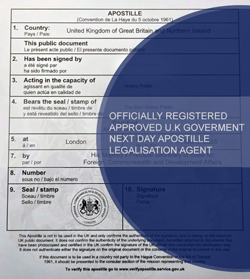
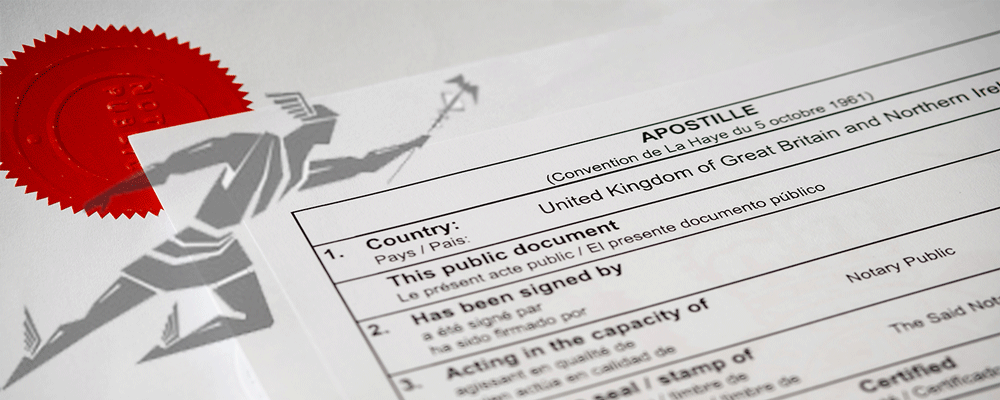
The UK is a signatory to the Hague Convention of 5 October 1961 Abolishing the Requirement of Legalisation for Foreign Public Documents — commonly called the Apostille Convention. Under this Convention, an apostille can only be attached to a public document. This is a specific legal category and is narrower than most people assume.
According to the Convention and FCDO guidance, a public document is broadly one that has been issued or certified by a public authority. In the UK context this typically means:
- Documents issued by a government body, such as the General Register Office (GRO) or Companies House
- Documents signed or certified by a notary public
- Documents bearing an official court seal or signature of a court officer
- Certificates issued by a university or other educational institution, provided they have first been notarised or bear an official institutional signature that the FCDO can verify
The critical point is that the FCDO must be able to verify the signature, seal, or stamp on the document against its own register of known public officials. If it cannot verify the originating authority, it will not issue an apostille. This is why many privately-produced documents must pass through a notary public first.
Which Specific Documents Can Commonly Be Apostilled?
The following categories cover the vast majority of documents that individuals and businesses submit for apostille in the UK:
Civil Registration Documents
Birth certificates, marriage certificates, civil partnership certificates, and death certificates issued by the General Register Office or a local register office are among the most frequently apostilled documents. It is important to use a full certificate rather than a short-form or extract version, as some countries will not accept the abbreviated format even with an apostille attached.
Educational Certificates and Transcripts
Degree certificates, diplomas, and academic transcripts are routinely apostilled for use in employment, further study, or professional registration abroad. However, most UK universities do not hold a signature on the FCDO register. This means these documents must first be notarised by a UK notary public before the FCDO can apostille the notary’s signature. Simply sending a university certificate directly to the FCDO will not work.
Criminal Record Certificates (DBS Certificates)
A Disclosure and Barring Service (DBS) certificate — particularly an Enhanced DBS check — is frequently required by foreign employers, visa authorities, and licensing bodies. The DBS is a public body whose signature the FCDO recognises, so these certificates can generally be apostilled directly without prior notarisation.
Companies House Documents
Documents issued by Companies House — including Certificates of Incorporation, Certificates of Good Standing, and memoranda or articles of association filed at Companies House — are public documents and are routinely apostilled for international business transactions, setting up overseas subsidiaries, or satisfying foreign regulatory requirements.
Court Documents
Documents issued by UK courts, such as a decree absolute (now called a final order of divorce), a grant of probate, letters of administration, or court orders, are eligible for apostille provided they bear the official court seal or the signature of a court officer. A grant of probate, for example, is commonly apostilled when an estate includes assets held in another country.
Notarised Documents
A document that has been signed before a UK notary public — such as a power of attorney, a statutory declaration, a certified copy of a passport, or a certified copy of a qualification — can be apostilled because the FCDO holds notaries’ signatures on its register. This is the standard route for documents that are not themselves public documents but need to be authenticated for use abroad.
Home Office Documents
Certain documents issued by the Home Office, such as a Certificate of Naturalisation or a Certificate of British Citizenship, can be apostilled. These are relatively sensitive documents, and the originals should be handled carefully; it is worth taking advice on whether a certified copy should be used instead.
Which Documents Cannot Be Apostilled — and Why?
Understanding what cannot be apostilled saves considerable time and expense. The following are commonly presented but are not eligible:
- Privately signed contracts or agreements — a commercial contract signed only by private individuals or company directors does not carry a verifiable public signature. It would need to be notarised first.
- Bank statements and utility bills — these are private commercial documents. A notary can certify a copy and the notarisation can then be apostilled, but the original bank statement itself cannot receive an apostille.
- Medical records and GP letters — a letter from a private GP or hospital is not a public document. Again, notarisation is the route to authentication.
- Photocopies and scanned prints — the FCDO requires either an original public document or a notarised copy. A photocopy without notarisation will be rejected.
- Documents issued by foreign governments — if a document was issued by an authority in another country, the UK FCDO has no jurisdiction over it. That document would need to be apostilled (or legalised) in its country of origin.
It is also worth noting that apostille is not the same as translation. An apostille authenticates the origin of a document; it says nothing about the content being understood in another language. If the destination country requires a translation, that is a separate step and typically must be done by a certified or sworn translator.
Does the Condition or Format of the Document Matter?
Yes — and this is an area where people are sometimes caught out. The FCDO will not apostille a document that is damaged, altered, or defaced. Specifically:
- Do not laminate certificates before submitting them for apostille. Lamination can obscure security features and makes it impossible to attach or verify the apostille.
- Documents with corrections, crossings-out, or unofficial annotations may be refused.
- Older certificates that are faded, torn, or otherwise deteriorated may be difficult to process. In some cases it is better to obtain a fresh official copy from the issuing body.
For educational and similar documents, always check whether the issuing institution can provide a new original rather than a copy. A fresh original is almost always preferable to a certified copy when the document is going to be scrutinised abroad.
What If Your Document Needs Extra Steps Before Apostille?
For many people, the document they hold is not quite ready for the FCDO. The most common preparatory step is notarisation by a UK notary public. A notary can:
- Certify a copy of an original document (passport, degree certificate, driving licence, etc.)
- Witness the signing of a power of attorney or statutory declaration
- Verify the authenticity of a document and add their official seal and signature
Once a notary has certified or executed a document, the notary’s signature is one the FCDO recognises, and the apostille can be issued. Some documents — particularly those going to civil law countries such as those in continental Europe, the Middle East, or parts of Asia — may require notarisation regardless of their original public status, because the receiving authority simply expects to see a notarial certificate as part of the chain of authentication.
For countries that are not members of the Apostille Convention — there are still several — a UK apostille is not sufficient. Full legalisation is required instead, which involves the FCDO and then the embassy or consulate of the destination country. The UK Government’s official guidance on getting a document legalised is the most reliable starting point for checking whether apostille or full legalisation is needed for a particular country.
How Can Apostille Direct London Help?
Navigating the eligibility rules, preparing documents correctly, and choosing between next-working-day FCDO apostille, e-apostille, or full legalisation can feel complicated — particularly when the stakes are high and time is short. If you are unsure whether your document qualifies for an apostille, or you need guidance on whether notarisation is required first, the team at Apostille Direct London can help you work through the process efficiently.
We are located at Room 102, Golden Cross House, 8 Duncannon Street, Westminster, London WC2N 4JF — directly opposite Charing Cross Station — and we accept walk-in clients Monday to Friday, 9:00am to 6:30pm. You can also reach us by phone on 0203 297 8766. Whether you need a single certificate apostilled or a bundle of business documents processed urgently, we offer FCDO next-working-day and e-apostille services to keep your plans on track.
Posted in Notarial Blog